How to Spot Mold in Your Carpet Before It Spreads
A musty smell or a dark patch on your carpet might seem like a minor nuisance. Left alone, that small spot can turn into a hidden reservoir of mold that affects the air you breathe and the structure underfoot. Catching the problem early gives you the best chance to handle it before the damage reaches framing or subflooring. This guide walks through the key things to check when you suspect moisture has settled into your carpet.
Start with Your Nose
Your sense of smell often picks up trouble before your eyes do. Walk slowly through the room and stop in any area that feels damp or smells earthy. Musty odors usually mean moisture is trapped in the carpet fibers, the padding beneath, or both. If the smell is strong near walls or corners, moisture may be wicking up from the baseboard or seeping through a concrete slab. A quick sniff test costs nothing but can tell you where to look first.
Look for Discoloration Patterns
Discolored carpet does not always announce itself as a dark stain. Sometimes it shows up as a lighter patch where the dye has broken down, or as a yellow ring around a spot that was once wet. Check under furniture legs, near plant pots, and along baseboards. If you see a color change that does not match normal wear, press the carpet with a paper towel. If moisture transfers, you have active wetness. If the towel stays dry but the spot feels stiff or crusty, the material has already dried after being wet long enough to leave residue.
Feel the Carpet and Padding
Kneel down and press your palm into the carpet. A healthy carpet bounces back. A carpet that feels spongy or stays compressed suggests the padding underneath is saturated. This is a serious sign because padding absorbs and holds water much longer than the face fibers. Even if the top of the carpet looks dry, the padding can be a breeding ground for mold. If you can press your thumb down and leave an indentation, you likely need to pull back a corner of the carpet to examine the padding directly.
Check High-Traffic and Low-Traffic Areas
High-traffic areas like hallways and doorways get worn down over time, which compacts the fibers and makes them hold moisture longer. Low-traffic areas like the space behind a couch or under a bed collect dust and humidity without much airflow. Both types deserve attention. In high-traffic spots, look for dark paths where dirt has mixed with moisture. In low-traffic spots, look for white or greenish fuzz on the surface or along the base of the wall. Mold in these quieter corners often goes unnoticed for months.
Inspect the Subfloor and Tack Strips
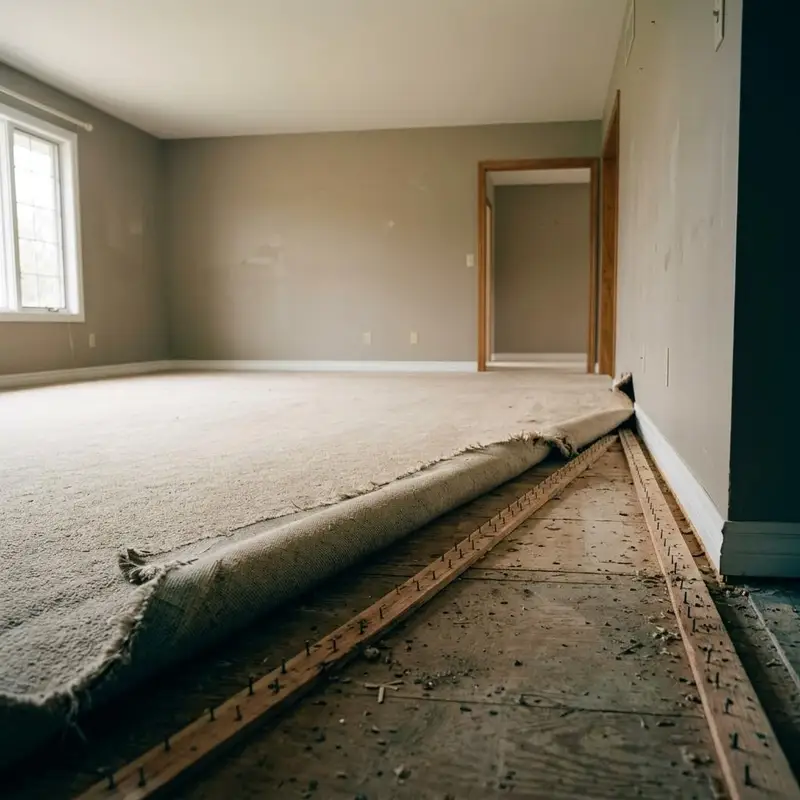
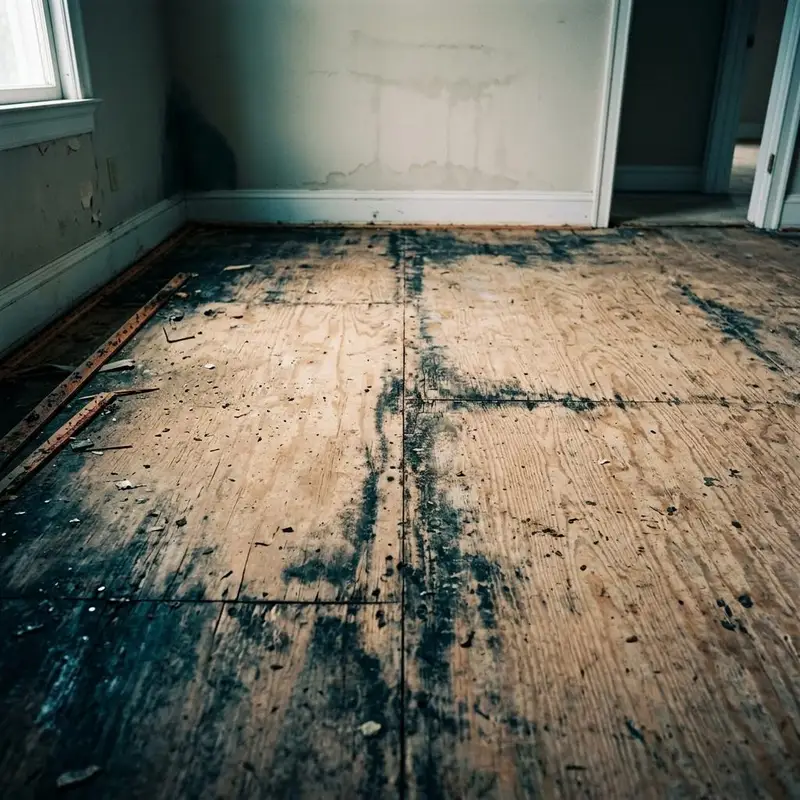
If you are comfortable lifting a corner of the carpet, check the tack strips that hold it in place. These wooden strips sit along the perimeter of the room and contact both the carpet and the subfloor. If they show dark staining or feel soft to the touch, moisture has reached the wood. The subfloor itself should be dry, firm, and free of dark spots. A damp subfloor means water has been sitting long enough to penetrate the carpet, the pad, and the floor structure. This is the point where carpet mold removal becomes more involved because the source of moisture may need to be stopped before the floor can dry properly.
Look for Condensation and Humidity Clues
Not all carpet moisture comes from spills or leaks. High indoor humidity can condense on a cold concrete slab or on the underside of a poorly insulated floor. If you live in a humid climate or your basement stays cool, condensation can form under the carpet without any visible water source. Check for moisture on the surface of concrete floors near exterior walls. If the concrete feels cool and damp, it is wicking moisture into the carpet above. A dehumidifier or improved ventilation can help, but the existing contamination may still need professional attention.
Watch for Changes After Rain or Snow
Pay attention to your carpet after heavy rain or melting snow. If you notice a new musty smell or a damp spot near an exterior wall after a storm, water may be entering through a gap in the foundation, a window well, or a roof leak that runs down inside the wall. Mark the spot with tape and check it again after the next storm. If the same area gets damp repeatedly, you have a recurring moisture problem that will continue to feed mold until the entry point is sealed.
Check Under Appliances and Near Plumbing
Refrigerators, dishwashers, washing machines, and ice makers all have water lines that can develop tiny leaks. A slow drip under a refrigerator may go unnoticed for weeks while the carpet underneath stays wet. Pull out these appliances if possible, or at least press the carpet around their base. If the carpet feels damp or the padding makes a squishing sound when you step on it, you have a leak. Fixing the appliance or the line is step one, but the carpet and padding may already need replacement or professional drying.
Know When to Call for Help
Some signs of mold in carpet are obvious. Others are subtle. If you find any area larger than a dinner plate that shows discoloration, feels damp, smells musty, or has visible growth, you are past the point where spot cleaning will solve it. Mold spreads through the padding and into the subfloor quickly once moisture is present. Trying to scrub it yourself can release spores into the air, making the problem worse for the whole house. At this stage, professional assessment is wise. Specialists in carpet mold removal have tools to measure moisture levels under the surface and to dry the structure thoroughly.
Many homeowners hesitate to act because they are not sure how bad the problem is. A simple inspection using the points above can give you a clear picture. If you spot multiple warning signs, or if a single area fails several of these checks, the smart move is to bring in experienced help. Carpet Mold Removal Services Pros can identify the full extent of the moisture damage and recommend the right course of action without tearing out more than necessary. Their process typically includes removing contaminated materials, drying the structure, and improving indoor air quality so your home feels fresh again.
Catching mold early saves money and protects your health. A fifteen-minute walk through your home, checking the spots described here, costs nothing and can prevent a much larger problem. If you find something concerning, do not ignore it. Mold does not stop growing on its own. The sooner you address the moisture, the simpler the fix.
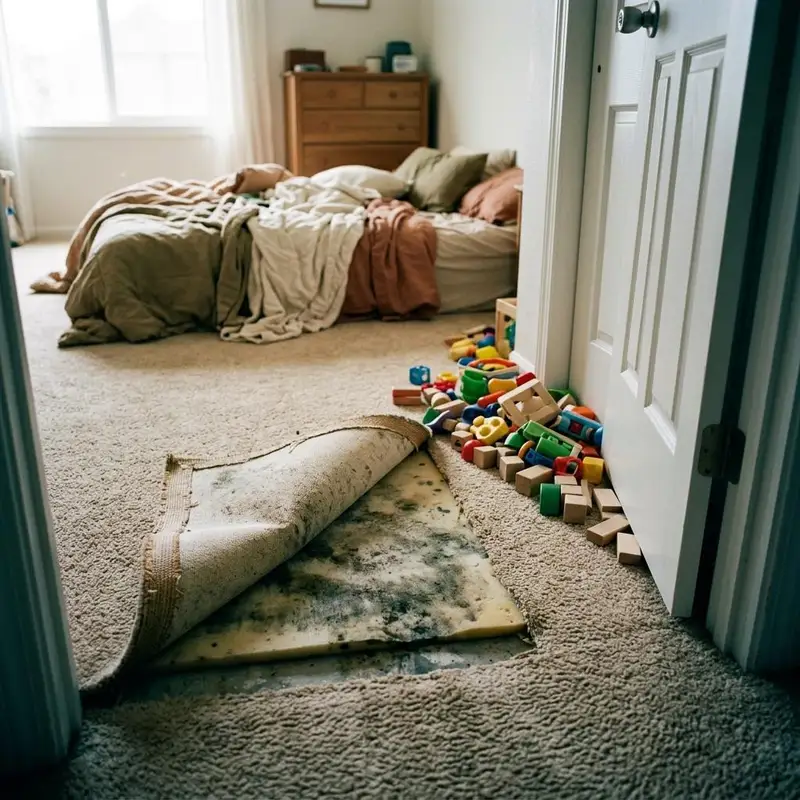
Remember that carpet mold removal is not just about the carpet itself. The padding, the tack strips, the subfloor, and even the air in the room all play a role. A thorough inspection covers all of these. And if the damage has spread beyond the surface, Carpet Mold Removal Services Pros have the equipment and experience to restore the room without guesswork. A dry, clean carpet is not just about looks. It is about keeping your home's indoor environment healthy for everyone who lives there.